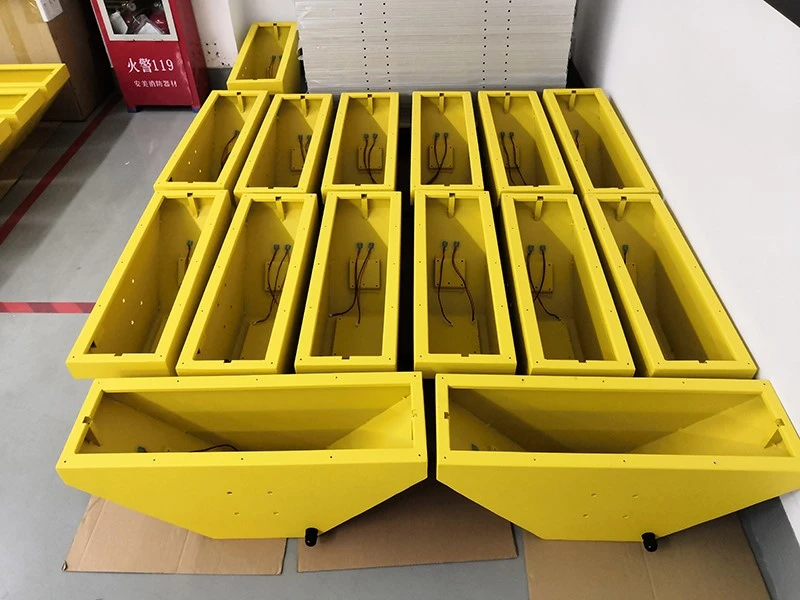
Building upon previously mentioned compliance requirements, the following are critical details to focus on during the installation process:
Positioning and Layout Details
Fixtures must be situated entirely within the 45° protection zone of the lightning rod and clear of obstructions such as billboards or parapets to ensure an unobstructed 360° view.
For curved structures like chimneys, fixtures should be mounted 1.5 to 3 meters below the top; for structures exceeding 150 meters in height, this distance may be increased to 4–6 meters below the chimney rim to prevent flue gas contamination.
In coastal areas with high salt-mist exposure, fixtures must meet an IP67 protection rating and be installed in sheltered locations to minimize corrosion.
Structural and Mounting Details
Mounting brackets must be made of aluminum alloy or 304 stainless steel; welds must be full-penetration welds on both sides, thoroughly cleaned of slag, and coated with two layers of anti-rust paint.
All exposed mounting bolts must be fitted with locking washers, and high-altitude components must include fall-prevention attachment points to prevent accidents caused by falling parts.
Use a level to calibrate the bracket's horizontality, keeping the deviation within 3 cm to ensure the light projection angle remains within the compliant range of 15° to 30°.
Electrical and Wiring Details
220V power lines and control signal lines must be routed through separate metal conduits; laying them in the same conduit is strictly prohibited to avoid signal interference.
Leave a 1-meter slack allowance at both ends of the cables and completely seal conduit joints with waterproof tape; in humid areas, cable connections must be tinned and covered with heat-shrinkable waterproof tubing.
All non-current-carrying metal parts must be reliably grounded with a grounding resistance of ≤4Ω; projects near airports require additional dedicated lightning protection grounding modules.