

Are there any guidelines for the placement of Taxiway Information Signs?
As a supplier of Taxiway Information Signs, I often encounter questions from airport authorities, aviation professionals, and contractors about the proper placement of these crucial signage elements. The placement of taxiway information signs is not a haphazard process; it is governed by a series of well - established guidelines and standards to ensure the safety and efficiency of aircraft movement on the ground.
Importance of Proper Placement
The primary purpose of taxiway information signs is to provide pilots with clear and accurate information about taxiways, runways, and other critical airport features. Incorrectly placed signs can lead to confusion, which may result in runway incursions, ground collisions, or delays in aircraft movement. For example, if a sign indicating a turnoff to a specific taxiway is placed too far from the actual turn, a pilot might miss it and continue on the wrong path.
Industry Standards and Regulations
The International Civil Aviation Organization (ICAO) and the Federal Aviation Administration (FAA) in the United States, among other aviation regulatory bodies around the world, have specific guidelines for taxiway sign placement. These standards take into account factors such as the size of the aircraft using the airport, the complexity of the taxiway layout, and the visibility conditions at the airport.
ICAO Annex 14 provides general principles for the design, installation, and marking of aerodromes, including taxiway signs. It emphasizes the need for signs to be visible from a sufficient distance, especially in low - visibility conditions. The FAA also has detailed requirements in its Advisory Circulars (ACs) and Federal Aviation Regulations (FARs). For instance, FAA AC 150/5340 - 18D provides guidance on airport marking and signage, which includes specific distances and angles for sign placement.
Placement Based on Sign Type
There are several types of taxiway information signs, each with its own placement requirements.
Taxiway Information Sign (Taxiway Information Sign)
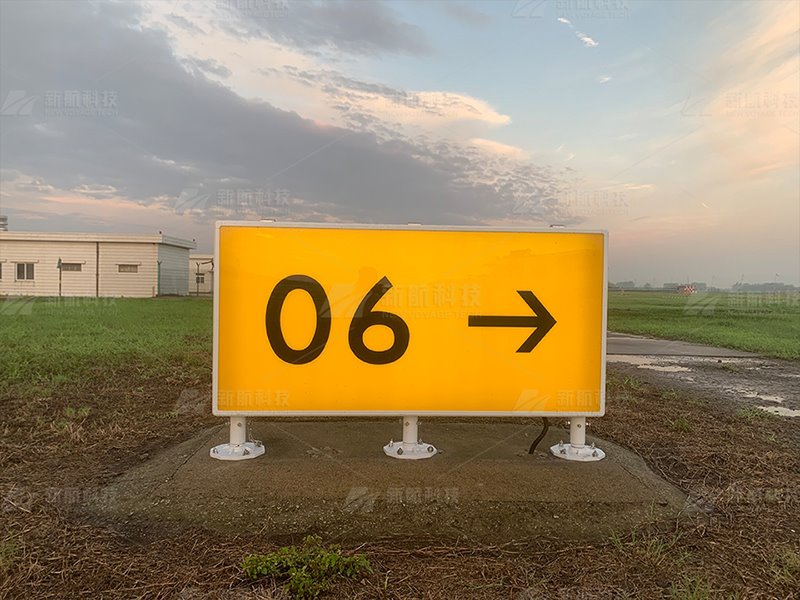
These signs provide general information about taxiways, such as their names and connections. They are typically placed alongside the taxiway at locations where a pilot needs to make a decision about which taxiway to follow. For example, at intersections of taxiways, a taxiway information sign should be placed on the left - hand side of the taxiing aircraft, facing the pilot. This allows the pilot to easily read the sign while keeping their focus on the path ahead.
Freestanding Sign (Freestanding Sign)
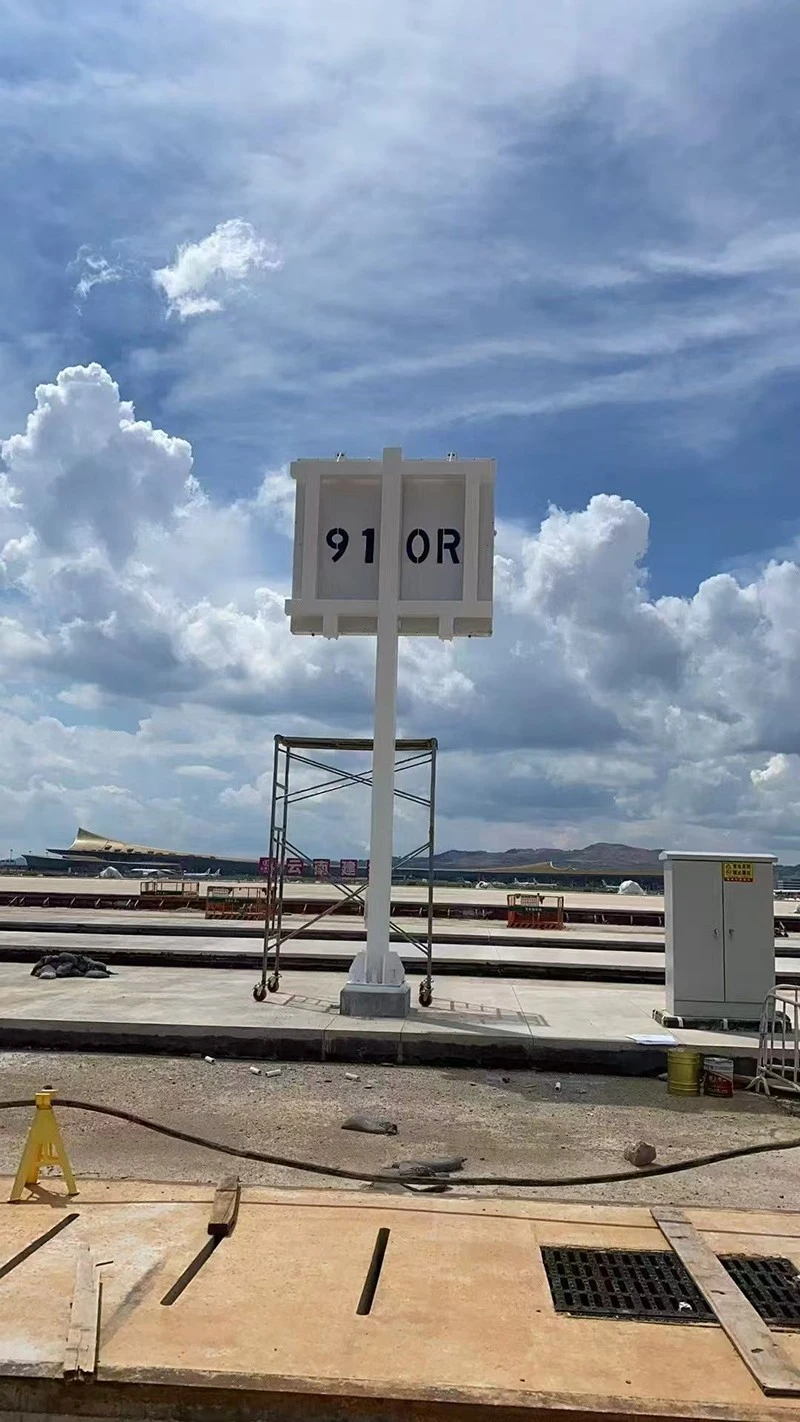
Freestanding signs are often used to mark important areas or provide information at a distance from the taxiway edge. They are commonly placed near airport entrances, aprons, or areas where there is a change in taxiway direction. The height and placement of freestanding signs should be carefully considered to ensure visibility from all angles and at different aircraft heights. For smaller airports, freestanding signs may be placed closer to the taxiway, while at larger international airports, they may need to be located further away to avoid being obscured by other aircraft or ground equipment.
Taxiway Suspended Sign (Taxiway Suspended Sign)
These signs are suspended above the taxiway and are typically used to provide information about runway exits or important taxiway junctions. The height of the suspended sign is crucial, as it needs to be high enough to clear the tallest aircraft using the airport but low enough to be easily visible to the pilots. They should be centered over the taxiway and placed at a distance that allows pilots to react in time to the information provided.
Taxiway Guidance Sign (Taxiway Guidance Sign)
Guidance signs are used to direct pilots along the correct taxi path. They are usually placed close to the taxiway edge and indicate the direction of travel, turning points, or the location of terminals. These signs should be placed in a way that provides a continuous flow of information as the aircraft taxis. For example, at a curved taxiway, guidance signs should be placed at regular intervals to help the pilot maintain the correct path.
Visibility and Lighting Considerations
Visibility is a key factor in sign placement. Signs should be placed in areas where there are no obstructions, such as buildings, vehicles, or other signs. Additionally, proper lighting is essential, especially for airports that operate at night or in low - visibility conditions. Illuminate signs are required to meet specific brightness and color - contrast standards to ensure they can be easily read from a distance.
The lighting of taxiway signs should also be designed to minimize glare for pilots. This may involve using shielded lights or adjusting the angle of the lighting fixtures. The location of the lighting source should be carefully planned to ensure that the sign is evenly illuminated without casting shadows or creating reflections that could interfere with the readability of the sign.
Site - Specific Factors
In addition to the general guidelines, site - specific factors also play a role in sign placement. The layout of the airport, the type of aircraft using the airport, and the local weather conditions all need to be considered.
For example, at an airport with a complex taxiway system, more signs may be required to provide clear guidance. In areas with high winds, signs need to be securely mounted to prevent them from being damaged or blown over. At airports located in regions with heavy snowfall, signs should be placed at a height that ensures they are not buried by snow.
Collaboration and Consultation
When placing taxiway information signs, it is essential to involve all stakeholders, including airport operators, pilots, maintenance crews, and sign manufacturers. Pilots can provide valuable insights into the readability and effectiveness of the signs from their perspective. Airport operators are responsible for ensuring that the signs comply with all regulatory requirements and are integrated into the overall airport layout. Maintenance crews can offer advice on the ease of access for sign installation and maintenance.
As a Taxiway Information Sign supplier, we work closely with our clients to understand their specific needs and provide customized solutions. We have a team of experts who are well - versed in the latest industry standards and can help guide the placement of signs to ensure optimal performance.
Conclusion
In conclusion, there are indeed clear guidelines for the placement of Taxiway Information Signs. These guidelines are based on international standards and take into account the safety, efficiency, and visibility requirements of aviation operations. Proper sign placement is crucial for maintaining the safety of aircraft on the ground and ensuring smooth airport operations.
If you are involved in an airport project or need to upgrade your existing taxiway signage system, we invite you to reach out to discuss your specific requirements. Our team of professionals is ready to assist you in selecting the right signs and ensuring their proper placement. Contact us to start the procurement process and take the first step towards enhancing the safety and efficiency of your airport's taxiway system.
References
- International Civil Aviation Organization (ICAO). Annex 14: Aerodromes.
- Federal Aviation Administration (FAA). Advisory Circular 150/5340 - 18D: Airport Marking and Signing.